Surfing the Galapagos Islands : A Full Guide to The Best Waves in Galapagos
Summary
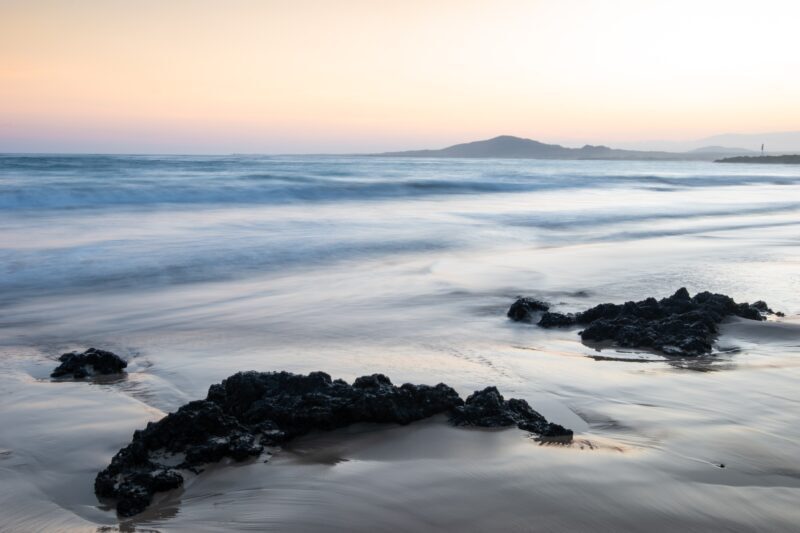
The Galapagos Islands are amongst the most rewarding, yet, under discovered surfing destinations in the world. For a long time, the Galapagos Islands were mostly known as a wildlife sanctuary, popularized by the studies of Charles Darwin. While this remains totally correct, another aspect of this archipelago is slowly becoming more and more popular which is the surfing potential.
The Galapagos islands have many empty world-class surf breaks only waiting to be discovered by the surfing community. It offers waves throughout the year, with south swells from April to October and occasional north swells from November to March. On a surf trip to the Galapagos, the best place to settle is probably the island of San Cristobal as it allows the best access to surf breaks, without demanding a permit. It also is exposed to both north and south swells.
The Galapagos islands have a lot of regulations put into place in order to protect both land and marine wildlife. Consequently, some of the surf spots are harder to access.
When to go
The best time to surf the Galapagos Islands is from December to April which provides big and consistent north swells as well as warm temperatures. From May to November, south swells are pushing in with full force but the weather is not a clement.
| January-February | March-April | May-June | July-August | September-October | November-December | |
|---|---|---|---|---|---|---|
| Suitable for: | Intermediate Advanced | Intermediate Advanced | Intermediate Advanced | Intermediate Advanced | Intermediate Advanced | All surfers |
| Air temperature | 26°C 79°F | 27°C 81°F | 24°C 75°F | 23°C 73°F | 23°C 73°F | 25°C 77°F |
| Water temperature | 25°C 77°F | 27°C 81°F | 24°C 75°F | 22°C 72°F | 22°C 72°F | 23°C 73°F |
| Crowd | Few people | Few people | Few people | Few people | Few people | Few people |
| Swell Consistency | 95% | 90% | 70% | 70% | 70% | 80% |
| Swell height | 6 ft | 6 ft | 4 ft | 6 ft | 6 ft | 6 ft |
Where to stay in Galapagos
The best place to stay on a surf trip in the Galapagos is Puerto Baquerizo, on the island of San Cristobal. You will have the best access to nearby surf spots like La Loberia, Punta Carole, El Canon and Tongo Reef.
Getting there
The difficult access to the Galapagos islands is what makes it a special and uncrowded place. The only way to get into the archipelago is by plane from Guayaquil. Some flights also leave from Quito, but will transit in Guayaquil. Upon entry, you will need to pay $200 in National Park entrance fee.
Safety/things to know
- Many waves are difficult to access due to park restrictions or military activity.
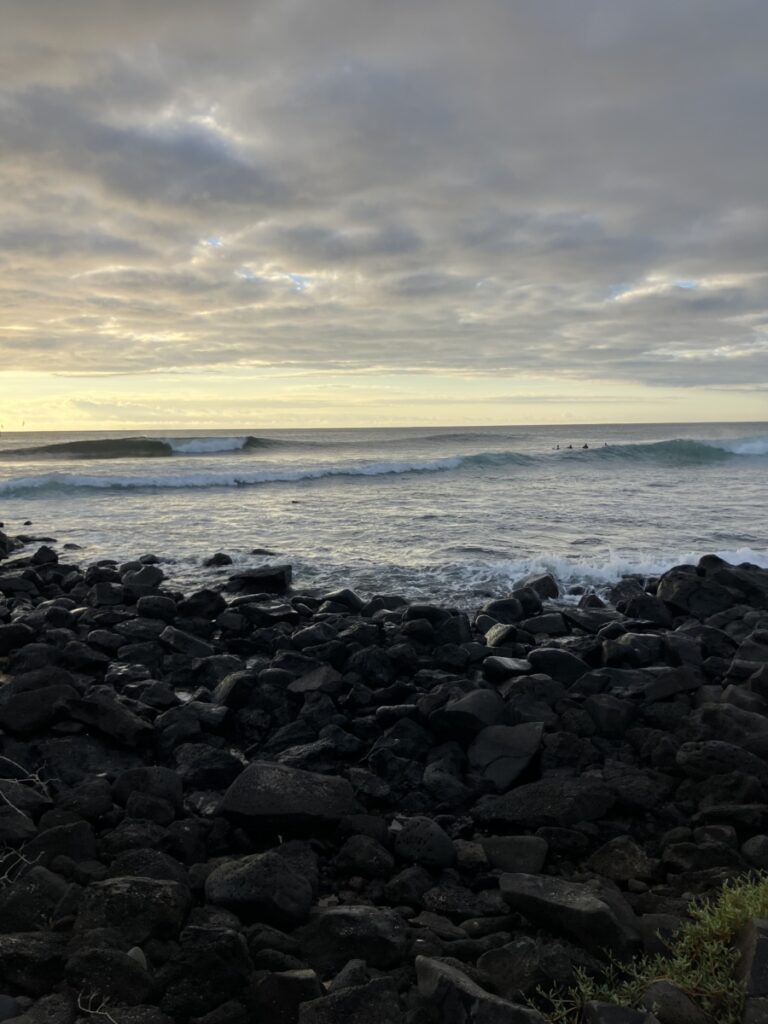
- Mostly powerful reef breaks, suitable for experienced surfers.
Surf spots in Galapagos
La Loberia
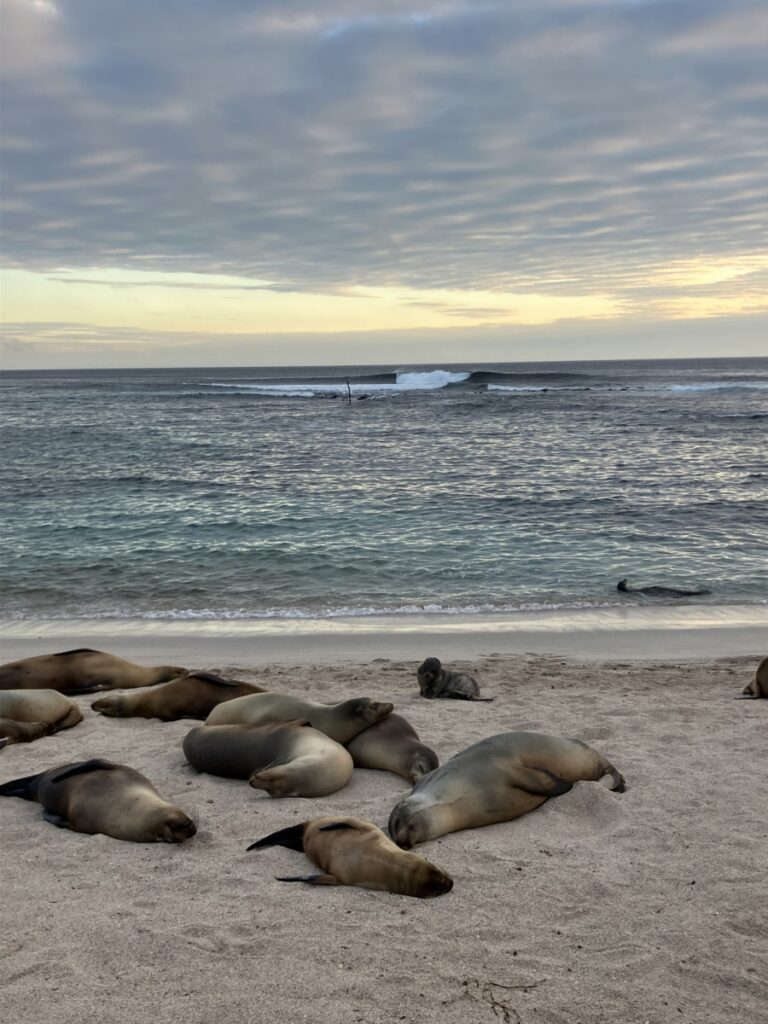
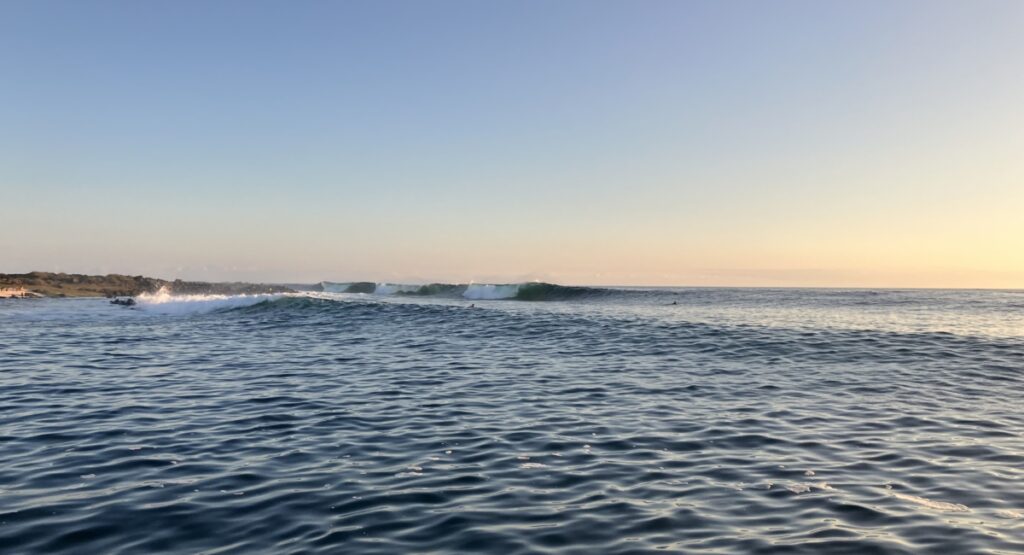
A playful, yet sometimes powerful A-framing reef break with sea lions often sharing the lineup. Works best on a mid to high tide and can provide fun walls for intermediate to advanced surfers.
Wave direction: Left and right
Bottom: Reef
Best tide: Mid to high
Skill level: Intermediate to advanced
Optimal swell direction: S-SW
Optimal wind direction: NE
Punta Carola
One of the best and most consistent surf spots in the Galapagos. Punta Carola is a powerful right-hand point break that can handle solid swells and deliver long rides.
Wave direction: Right
Bottom: Rock and reef
Best tide: Mid
Skill level: Intermediate to advanced
Optimal swell direction: S-SW
Optimal wind direction: NE
Tongo reef
A less crowded reef break that offers probably the longest waves in Galapagos. It’s a good option for intermediate surfers looking for a quieter session as it is a bit harder to access.
Wave direction: Left and occasional right
Bottom: Reef
Best tide: Mid to high
Skill level: Intermediate to advanced
Optimal swell direction: S-SW
Optimal wind direction: NE
Tortuga Bay
Famous for its stunning scenery and marine iguanas on the beach, Tortuga Bay also offers a surfable beach break. The waves here are more exposed to wind, but on the right day can deliver fun, rippable peaks.
Wave direction: Right and left
Bottom: Sand
Best tide: Mid to high
Skill level: Any
Optimal swell direction: S-SW
Optimal wind direction: NE